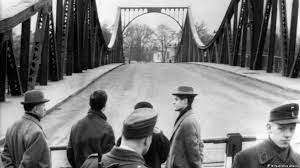
The 1962 U.S.A. spy exchange stands as a remarkable event in the annals of Cold War history, showcasing a rare instance of cooperation between the United States and the Soviet Union at the height of their ideological rivalry. This exchange, which occurred on the Glienicke Bridge connecting West Berlin with Potsdam, East Germany, on February 10, 1962, involved the release of captured spies Francis Gary Powers and Rudolf Abel. The exchange was orchestrated against the backdrop of escalating tensions and served as a pivotal moment in the delicate balance of power between the two superpowers.

At the center of this exchange was Francis Gary Powers, an American pilot whose U-2 reconnaissance aircraft was shot down over Soviet territory in May 1960. Powers, who was on a covert mission to gather intelligence on Soviet military capabilities, was captured alive and subsequently paraded before the world in a televised spectacle orchestrated by Soviet Premier Nikita Khrushchev. His capture deeply embarrassed the United States and strained already fragile relations between the superpowers.

Rudolf Abel, a Soviet intelligence officer operating under the guise of an artist in New York City, was arrested by the FBI in 1957. Abel, whose real name was Vilyam Fisher, had been running a sophisticated Soviet spy ring in the United States for years. His arrest and subsequent trial garnered significant attention and exposed the extent of Soviet espionage activities on American soil.

The negotiation for the spy exchange was a complex and delicate diplomatic maneuver, conducted through back channels and intermediaries over several months. Both sides saw the potential benefits of a swap: the United States sought to reclaim Powers and salvage its reputation, while the Soviet Union aimed to secure the return of Abel, a valuable asset in their espionage efforts.

Finally, on February 10, 1962, the exchange took place on the Glienicke Bridge, a symbolic link between East and West. Powers and Abel, accompanied by their respective delegations, crossed the bridge from opposite ends and met in the middle. The exchange was meticulously choreographed to ensure the safety of all involved and to prevent any last-minute complications.

The event captured the world's attention and was hailed as a rare moment of cooperation amidst the intense rivalry of the Cold War. It demonstrated that, despite their profound differences and mutual suspicions, the United States and the Soviet Union could find common ground when their interests aligned. The successful exchange helped to defuse tensions and paved the way for future negotiations and detente between the superpowers.

For Francis Gary Powers, the exchange marked the end of a harrowing ordeal. He returned to the United States and was debriefed by intelligence officials before resuming a quiet life out of the spotlight. Rudolf Abel, on the other hand, was welcomed back as a hero in the Soviet Union and continued his work as a Soviet intelligence officer until his retirement.

The 1962 U.S.A. spy exchange remains a testament to the complexities of Cold War diplomacy and the enduring human drama that unfolded against the backdrop of global power politics. It serves as a reminder that, even in the darkest moments of confrontation, there is always the potential for reconciliation and cooperation.