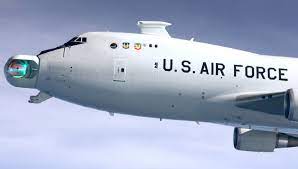
In 2010, the United States made significant strides in military technology with the successful testing of its Airborne Laser (ABL) weapon system. This groundbreaking achievement marked a major milestone in the development of directed energy weapons, showcasing the potential of laser-based technology in enhancing national defense capabilities.

The Airborne Laser program had been in development for decades, with the aim of creating a defensive weapon system capable of intercepting and destroying ballistic missiles during their boost phase. Unlike traditional missile defense systems, which rely on interceptor missiles to engage targets in the exoatmosphere or endoatmosphere phases of flight, the ABL system utilized a high-energy laser mounted on a modified Boeing 747 aircraft.

The 2010 tests represented a culmination of years of research, development, and testing, demonstrating the effectiveness and feasibility of the ABL system in real-world scenarios. During these tests, the airborne platform successfully tracked and engaged multiple ballistic missile targets, demonstrating its ability to rapidly acquire and neutralize threats with precision and accuracy.

One of the key advantages of the ABL system was its ability to engage targets during the boost phase, when ballistic missiles are most vulnerable and have not yet deployed decoys or countermeasures. By intercepting missiles in the early stages of flight, the ABL offered a potential solution to the challenge of missile defense, providing a layer of protection against potential adversaries equipped with ballistic missile capabilities.

The successful testing of the ABL system in 2010 represented a significant technological achievement with far-reaching implications for national security and defense policy. The ability to intercept ballistic missiles in their boost phase could potentially revolutionize the dynamics of missile defense, deterring aggression and enhancing the security of the United States and its allies.

Furthermore, the development of directed energy weapons like the ABL system signaled a shift towards more advanced and cost-effective military technologies. Unlike conventional missile defense systems, which rely on expensive interceptor missiles and elaborate ground-based infrastructure, directed energy weapons offer a more flexible and cost-efficient alternative, with the potential for rapid deployment and scalability.

However, despite its successes, the ABL program faced challenges and limitations. The high cost of development and operation, as well as concerns about the system's vulnerability to countermeasures and its limited range and effectiveness against certain types of missiles, raised questions about the feasibility and practicality of fielding the ABL system on a larger scale.

In the years following the 2010 tests, the ABL program was eventually scaled back and ultimately discontinued, as the focus shifted towards other missile defense initiatives and emerging threats. Nevertheless, the legacy of the ABL program continues to influence the development of directed energy weapons and the broader field of military technology, paving the way for future innovations in national defense capabilities.

Overall, the successful testing of the Airborne Laser weapon system in 2010 represented a significant achievement in the advancement of directed energy weapons and missile defense technology. While the ABL program ultimately faced challenges and limitations, its legacy continues to shape the landscape of military technology and defense policy, underscoring the importance of innovation and experimentation in ensuring the security and defense of the United States and its allies.