On February 13, 1931, the United States was rocked by one of the deadliest train crashes in its history, a tragic event that claimed the lives of numerous passengers and sent shockwaves through the nation. Known as the "Darien Disaster," this catastrophic train accident occurred near Darien, Connecticut, and remains etched in the memories of those who witnessed its devastating aftermath.

The train involved in the Darien Disaster was the White Mountain Express, a popular passenger train operated by the New York, New Haven and Hartford Railroad Company. On the fateful morning of February 13th, the White Mountain Express was traveling southbound from Boston, Massachusetts, en route to New York City, carrying hundreds of passengers on board.

As the train approached Darien, Connecticut, it encountered dense fog and poor visibility, conditions exacerbated by the cold temperatures and winter weather. Despite efforts to proceed cautiously, the engineer of the White Mountain Express was unable to see a signal indicating that the drawbridge over the Noroton River was raised, indicating that the bridge was open to allow maritime traffic to pass.

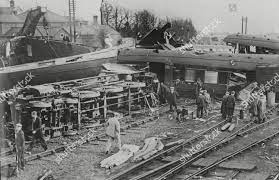
Tragically, the train continued onto the open drawbridge, unaware of the impending danger. Within moments, the locomotive and several cars plunged into the icy waters below, sending shockwaves through the community and sparking a frantic rescue effort to save those trapped in the wreckage.

The aftermath of the Darien Disaster was harrowing, with reports of passengers screaming for help as they struggled to escape the submerged cars. Emergency responders rushed to the scene, braving the frigid waters and treacherous conditions to rescue survivors and recover the bodies of those who perished in the crash.

In the days and weeks that followed, the nation mourned the loss of the victims of the Darien Disaster, and questions arose about the circumstances surrounding the tragic accident. Investigations into the cause of the crash revealed a combination of factors, including the foggy weather conditions, human error, and mechanical failures, all of which contributed to the catastrophic outcome.

The Darien Disaster served as a wake-up call for the railroad industry and prompted calls for improved safety regulations and infrastructure upgrades to prevent similar accidents in the future. In response to the tragedy, measures were implemented to enhance visibility on drawbridges, improve communication between train operators and signalmen, and increase training for railroad personnel.

Despite the passage of time, the memory of the Darien Disaster continues to resonate with the American public, serving as a reminder of the fragility of life and the importance of prioritizing safety in all modes of transportation. While the technology and safety protocols of the railroad industry have evolved since 1931, the lessons learned from the Darien Disaster remain relevant today, as communities strive to prevent accidents and protect the lives of those who travel by train.