In 1948, the seeds of what would become one of the most iconic and beloved American sports were sown with the formation of the National Association for Stock Car Auto Racing (NASCAR). Born out of the rough-and-tumble world of bootlegging and moonshine running, NASCAR would evolve into a multi-billion-dollar industry and a cultural phenomenon that captured the hearts and imaginations of millions.

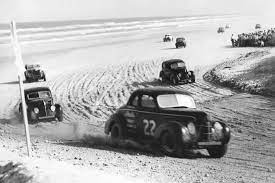
The roots of NASCAR can be traced back to the Prohibition era, when moonshine runners modified their cars for speed and performance to outrun law enforcement. After World War II, these adrenaline-fueled drivers, eager to test their skills and machines, began organizing informal races on dirt tracks across the Southeastern United States. These races, often held on weekends, attracted large crowds of spectators, laying the groundwork for the burgeoning sport of stock car racing.

Recognizing the growing popularity of these events, Bill France Sr., a former moonshine runner turned race promoter, saw an opportunity to organize and professionalize the sport. On February 21, 1948, France gathered a group of drivers, mechanics, and track owners at the Streamline Hotel in Daytona Beach, Florida, to establish NASCAR. At that historic meeting, the organization was officially founded, with France serving as its first president.

In its early years, NASCAR faced numerous challenges as it struggled to gain legitimacy and attract widespread attention. Races were often held on makeshift tracks carved out of dirt fields, and safety standards were virtually nonexistent. However, the sheer excitement and raw talent on display captivated audiences, fueling the sport's rapid growth and expansion.

One of the key factors in NASCAR's rise to prominence was the advent of televised broadcasts in the 1950s and 1960s. As television sets became more common in American households, NASCAR capitalized on the opportunity to reach a wider audience, broadcasting races to millions of viewers across the country. This increased exposure helped to elevate the sport's profile and attract corporate sponsors eager to capitalize on its popularity.

Throughout the decades, NASCAR has undergone significant transformations, evolving from its humble roots into a sophisticated and highly competitive sport. The introduction of paved tracks, advanced technology, and strict safety regulations have ushered in a new era of professionalism and innovation. Today, NASCAR boasts some of the most skilled drivers and cutting-edge racing machines in the world, competing in high-speed events that push the limits of human and mechanical performance.

In addition to its on-track excitement, NASCAR has also become a cultural phenomenon, ingrained in the fabric of American society. From the iconic Daytona 500 to the thrilling playoff races of the NASCAR Cup Series, fans flock to racetracks across the country to witness the action firsthand. The sport's colorful personalities, passionate fan base, and sense of tradition have helped to cement its place in the national consciousness.

As NASCAR approaches its 75th anniversary, it continues to evolve and adapt to the changing landscape of motorsports. With a focus on sustainability, diversity, and innovation, NASCAR remains committed to pushing the boundaries of what is possible both on and off the track. Whether it's the roar of engines, the smell of burning rubber, or the thrill of victory, NASCAR continues to captivate audiences around the world, ensuring that its legacy will endure for generations to come.