The year 1968 was a pivotal period in the Vietnam War, characterized by significant shifts in U.S. policy and escalating levels of violence and protest both at home and abroad. As the conflict in Vietnam dragged on with no clear end in sight, American policymakers faced mounting challenges and growing public disillusionment, leading to a reevaluation of the United States' approach to the war.

At the outset of 1968, the Vietnam War had already been raging for several years, with U.S. military involvement steadily increasing in support of the South Vietnamese government against the communist Viet Cong insurgency and North Vietnamese forces. However, despite massive American military and financial assistance, the conflict remained deadlocked, with neither side able to achieve a decisive victory.

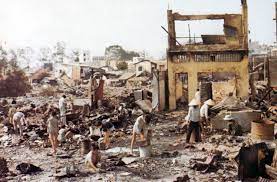
The Tet Offensive, launched by the Viet Cong and North Vietnamese forces in late January 1968, marked a turning point in the Vietnam War and a major setback for U.S. forces. The coordinated attack targeted more than 100 cities and military installations across South Vietnam, catching American and South Vietnamese troops off guard and inflicting heavy casualties.

Although U.S. and South Vietnamese forces eventually repelled the Tet Offensive, the sheer scale and intensity of the attacks shattered the perception of progress in the war and undermined public confidence in the Johnson administration's handling of the conflict. The Tet Offensive exposed the limitations of U.S. military power and challenged the official narrative of success and progress in Vietnam.

In the wake of the Tet Offensive, U.S. policymakers began to reassess their strategy in Vietnam and explore avenues for de-escalation and negotiation. President Lyndon B. Johnson, facing mounting criticism and dissent both within his own party and from the broader American public, announced in March 1968 that he would not seek reelection, signaling a potential shift in U.S. policy towards Vietnam.

The presidential election of 1968 further underscored the deep divisions and debates surrounding the Vietnam War. Democratic candidate Robert F. Kennedy, who had emerged as a vocal critic of the war, was assassinated in June 1968, leaving the anti-war movement without one of its most prominent voices. Meanwhile, Republican candidate Richard Nixon campaigned on a platform of "peace with honor" in Vietnam, promising to end the war and bring American troops home.

Following his election victory, President Nixon initiated a policy of "Vietnamization," aimed at gradually transferring responsibility for the war to the South Vietnamese government while reducing the direct involvement of U.S. forces. This approach reflected a broader shift towards a more pragmatic and realistic assessment of U.S. objectives and capabilities in Vietnam.

The Nixon administration also pursued diplomatic initiatives to negotiate a peaceful resolution to the conflict, including secret talks with North Vietnamese representatives in Paris. These negotiations eventually led to the signing of the Paris Peace Accords in 1973, which brought an end to direct U.S. military involvement in Vietnam and established a framework for the withdrawal of American troops.

However, the peace agreement ultimately failed to bring stability to Vietnam, as fighting between North and South Vietnamese forces resumed shortly after the withdrawal of U.S. troops. In 1975, North Vietnamese forces launched a massive offensive that culminated in the fall of Saigon and the reunification of Vietnam under communist rule.

The U.S. policy in Vietnam in 1968 reflected a complex interplay of military, political, and diplomatic factors, shaped by the realities of the conflict on the ground and the shifting dynamics of domestic politics in the United States. While the year witnessed significant changes in U.S. strategy and rhetoric, it also laid bare the enduring complexities and challenges of waging war in a distant and unfamiliar land.