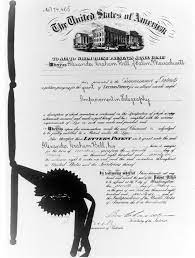
In 1876, the United States saw a historic milestone in communication technology with the granting of a patent for the telephone to inventor Alexander Graham Bell. Bell's invention revolutionized the way people communicated over long distances, laying the foundation for the modern telecommunications industry and shaping the course of human history. The patent for the telephone marked a turning point in the evolution of communication technology and sparked a wave of innovation and progress in the field of telephony.

Alexander Graham Bell's invention of the telephone was the culmination of years of experimentation, research, and ingenuity. Born in Scotland and later immigrating to the United States, Bell was a teacher of the deaf who became fascinated with the idea of transmitting sound electronically. Working tirelessly in his laboratory, Bell developed a device that could transmit speech over a wire, leading to the creation of the first practical telephone.

On March 7, 1876, Alexander Graham Bell was granted U.S. Patent No. 174,465 for his invention of the telephone. The patent described the device as an "improvement in telegraphy" that allowed for the transmission of vocal or other sounds telegraphically. This groundbreaking invention revolutionized communication by enabling people to speak to one another in real-time over long distances, bridging gaps and connecting individuals in ways previously unimaginable.

The granting of the patent for the telephone in 1876 marked a significant moment in the history of technology and communication. Bell's invention represented a leap forward in the field of telephony, offering a more efficient and effective means of communication than existing methods such as the telegraph. The telephone quickly gained popularity and acceptance, as people recognized its potential to transform the way they interacted and conducted business.

The impact of the telephone patent extended far beyond the realm of communication technology. The invention of the telephone revolutionized various industries, including business, commerce, and transportation, by enabling faster and more reliable communication between individuals and organizations. The telephone also had profound social and cultural implications, bringing people closer together, facilitating the exchange of ideas and information, and fostering a sense of interconnectedness and community.

The patent for the telephone sparked a wave of innovation and competition in the telecommunications industry, as inventors and entrepreneurs sought to improve upon Bell's original design and develop new and advanced communication technologies. The telephone quickly evolved from a simple device for voice communication to a sophisticated network of interconnected systems that spanned continents and connected people around the world.