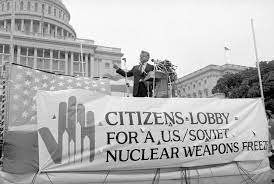
In 1983, the United States witnessed a powerful grassroots movement known as the Nuclear Freeze campaign, which called for a halt to the arms race and the proliferation of nuclear weapons during the height of the Cold War. The Nuclear Freeze movement emerged as a response to escalating tensions between the United States and the Soviet Union, as both superpowers continued to build up their nuclear arsenals, raising fears of a devastating nuclear conflict that could potentially lead to global annihilation. The call for a nuclear freeze resonated with millions of Americans who were deeply concerned about the existential threat posed by nuclear weapons and sought to advocate for peace, disarmament, and international cooperation.

The Nuclear Freeze movement gained momentum in the early 1980s as a diverse coalition of peace activists, religious leaders, academics, and concerned citizens joined forces to demand a freeze on the testing, production, and deployment of nuclear weapons by the United States and the Soviet Union. The movement's central goal was to prevent further escalation of the arms race and create space for diplomatic negotiations and arms control agreements that could reduce the risk of nuclear war and promote stability and security on a global scale.

One of the key turning points in the Nuclear Freeze campaign came in June 1982 when the Freeze resolution was introduced in the U.S. Congress, calling for a mutual freeze on the testing, production, and deployment of nuclear weapons by the United States and the Soviet Union. The resolution garnered widespread public support and sparked a national debate on the dangers of nuclear proliferation and the urgent need for disarmament and peacebuilding efforts. Grassroots activists organized rallies, marches, and educational events to raise awareness about the consequences of nuclear war and mobilize public opinion in favor of the Freeze proposal.

The Nuclear Freeze movement also received significant backing from prominent political figures, celebrities, and organizations, who lent their voices and resources to the cause. Notable supporters of the Freeze campaign included former President Jimmy Carter, who endorsed the call for a nuclear freeze as a way to reduce the risk of nuclear conflict and promote global security. Hollywood actors, musicians, and artists also joined the movement, using their platforms to raise awareness about the dangers of nuclear weapons and the importance of nuclear disarmament.

In 1983, the Nuclear Freeze campaign reached its peak with the historic "Freeze Voter" referendum, which allowed citizens in various states and localities to express their support for a nuclear freeze through ballot initiatives and public votes. Millions of Americans participated in the Freeze referendums, sending a powerful message to policymakers and world leaders about the public's desire for peace, disarmament, and nuclear restraint. The success of the Freeze referendums demonstrated the strength and breadth of public support for nuclear disarmament and helped galvanize further action at the national and international levels.

Although the Nuclear Freeze campaign did not immediately lead to a formal freeze on nuclear weapons, it had a lasting impact on public opinion, political discourse, and nuclear arms control efforts. The movement helped raise awareness about the catastrophic consequences of nuclear war, fostered dialogue and cooperation between the United States and the Soviet Union, and paved the way for future arms control agreements such as the Intermediate-Range Nuclear Forces Treaty (INF) signed in 1987. The Nuclear Freeze campaign remains a powerful example of grassroots activism and citizen engagement in promoting peace, security, and a world free from the threat of nuclear weapons.