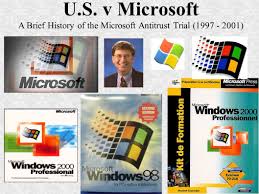
In the year 2000, the United States was embroiled in a landmark legal battle known as the US Microsoft antitrust case, which captivated the tech industry and the public at large. The case revolved around allegations of monopolistic practices and anticompetitive behavior by the software giant Microsoft, leading to a protracted legal battle that would have far-reaching implications for the tech industry and the concept of antitrust regulation in the United States.

The roots of the US Microsoft antitrust case can be traced back to the 1990s when Microsoft's dominance in the software market was reaching unprecedented levels. The company's Windows operating system had become a ubiquitous presence on personal computers, dominating the market and establishing Microsoft as a powerhouse in the tech industry. As Microsoft continued to expand its influence and market share, concerns began to arise about the company's business practices and their potential impact on competition and innovation.

The US Department of Justice (DOJ), along with several state attorneys general, launched an investigation into Microsoft's business practices, focusing on allegations that the company had engaged in anticompetitive behavior to maintain its monopoly in the software market. The crux of the case centered on Microsoft's bundling of its Internet Explorer web browser with the Windows operating system, effectively leveraging its dominance in the operating system market to gain an unfair advantage in the browser market.

The US Microsoft antitrust case came to a head in 2000 when a federal judge ruled that Microsoft had violated antitrust laws by engaging in anticompetitive practices to crush its rivals and maintain its monopoly in the software market. The judge's ruling called for Microsoft to be split into two separate companies, with one focused on the Windows operating system and the other on software applications.

However, the case took a dramatic turn when a settlement was reached between Microsoft and the DOJ in 2001, effectively ending the legal battle and avoiding the breakup of the company. Under the terms of the settlement, Microsoft agreed to a series of restrictions and behavioral remedies aimed at promoting competition in the software market and preventing future anticompetitive practices.

The US Microsoft antitrust case had a profound impact on the tech industry and the broader business landscape in the United States. The case served as a wake-up call for regulators and lawmakers about the potential dangers of unchecked corporate power and the need for robust antitrust enforcement to protect competition and innovation. It also sparked a renewed debate about the role of government regulation in the tech industry and the balance between promoting competition and allowing companies to innovate and grow.

In the years following the US Microsoft antitrust case, the tech industry underwent significant changes, with new competitors emerging to challenge Microsoft's dominance and regulators taking a closer look at the practices of other tech giants. The case set a precedent for antitrust enforcement in the digital age and laid the groundwork for future investigations into anticompetitive practices in the tech industry.

Overall, the US Microsoft antitrust case of 2000 was a watershed moment in the history of the tech industry and antitrust regulation in the United States. It highlighted the importance of maintaining a competitive marketplace and holding powerful companies accountable for their actions, setting the stage for a new era of scrutiny and oversight in the ever-evolving world of technology and business.