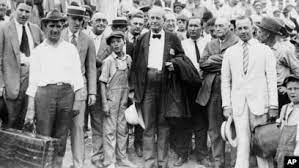
In 1925, a high school biology teacher named John Thomas Scopes found himself at the center of one of the most famous legal battles in American history, known as the Scopes Monkey Trial. The trial, which took place in Dayton, Tennessee, pitted proponents of evolution against advocates of creationism and highlighted the ongoing debate over the teaching of evolution in public schools. John Scopes' involvement in the trial thrust him into the national spotlight and made him a symbol of the clash between science and religion, education and censorship, and progress and tradition in 1920s America.

John Thomas Scopes was a young science teacher at Rhea County High School in Dayton, Tennessee, when he was approached by the American Civil Liberties Union (ACLU) to serve as a test case in a legal challenge to Tennessee's Butler Act, which prohibited the teaching of evolution in public schools. Scopes, who was sympathetic to the cause of academic freedom and the teaching of scientific principles, agreed to teach evolution to his students, knowing that he would likely face legal consequences for his actions.

On May 5, 1925, John Scopes was formally charged with violating the Butler Act and was arrested for teaching evolution in his classroom. The arrest set off a chain of events that would lead to the infamous Scopes Monkey Trial, a highly publicized legal battle that captivated the nation and brought the issue of evolution and creationism to the forefront of American consciousness. The trial attracted national media attention and drew prominent figures from both sides of the debate, including renowned attorney Clarence Darrow, who defended Scopes, and former presidential candidate William Jennings Bryan, who prosecuted the case.

The Scopes Monkey Trial was not just a legal showdown over the teaching of evolution; it was also a cultural and ideological clash between modernity and tradition, science and religion, reason and faith. The trial highlighted the tensions between different worldviews and belief systems in 1920s America, as well as the broader social and political divisions that characterized the era. The trial became a symbol of the ongoing struggle between progress and conservatism, enlightenment and dogma, and the competing forces that shaped American society in the early 20th century.

Throughout the trial, John Scopes remained a central figure, representing the cause of academic freedom, scientific inquiry, and intellectual curiosity. Scopes' decision to challenge the Butler Act and teach evolution in his classroom was a courageous act of defiance against censorship, ignorance, and prejudice. Despite the legal proceedings and public scrutiny, Scopes maintained his composure and dignity, standing firm in his belief in the importance of teaching evolution as a fundamental scientific principle.

In the end, John Scopes was found guilty of violating the Butler Act and was fined $100, although the verdict was later overturned on a technicality. The Scopes Monkey Trial had a lasting impact on American society, sparking debates over education, religion, and the separation of church and state that continue to resonate to this day. The trial also raised important questions about the role of science in education, the limits of government intervention in academic matters, and the need to protect intellectual freedom and academic inquiry from censorship and ideological interference.

John Thomas Scopes' involvement in the Scopes Monkey Trial made him a symbol of the struggle for academic freedom, scientific integrity, and intellectual courage in the face of adversity. Scopes' willingness to challenge the status quo and stand up for his beliefs inspired generations of educators, scientists, and advocates of reason and rationality. The legacy of John Scopes and the Scopes Monkey Trial serves as a reminder of the importance of defending intellectual freedom, promoting scientific literacy, and upholding the principles of open inquiry and critical thinking in education and society.