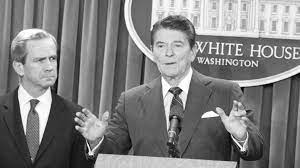
The Iran-Contra Affair of 1987 was a scandal that rocked the United States government and captivated the nation, revealing a complex web of clandestine operations, illegal activities, and high-level deception. The Iran-Contra Affair involved a covert operation in which senior officials in the Reagan administration secretly facilitated the sale of arms to Iran, a country that was under an arms embargo, in exchange for the release of American hostages held in Lebanon. The proceeds from these arms sales were then funneled to support the Contras, a rebel group fighting the Sandinista government in Nicaragua, despite a congressional ban on such support. The Iran-Contra Affair exposed the lengths to which some officials were willing to go to pursue their foreign policy objectives, circumventing the law and undermining the principles of democracy and transparency.

The origins of the Iran-Contra Affair can be traced back to the early 1980s, when the Reagan administration sought to secure the release of American hostages held in Lebanon by Hezbollah, a militant group with ties to Iran. In an effort to establish a channel of communication with Iran, senior officials, including National Security Council (NSC) staff member Oliver North and National Security Advisor John Poindexter, devised a plan to sell arms to Iran through third-party intermediaries. The arms sales were intended to secure the release of the hostages and to potentially improve relations with Iran, which was seen as a strategic ally in the region.

However, the covert nature of the arms sales to Iran, which violated the U.S. government's own arms embargo against Iran, raised concerns among some officials and members of Congress. As details of the operation began to emerge, it became clear that the Reagan administration had engaged in illegal and unethical activities, including the diversion of funds from the arms sales to support the Contras in Nicaragua. The Contras were a rebel group fighting the leftist Sandinista government, and the U.S. government had been prohibited from providing military assistance to them by the Boland Amendment, a congressional restriction passed in 1984.

The Iran-Contra Affair came to light in November 1986 when a Lebanese newspaper exposed the arms sales to Iran, triggering a series of investigations by Congress, the media, and independent counsel Lawrence Walsh. The revelations of the Iran-Contra Affair shocked the nation and led to a political firestorm, as questions were raised about the legality, morality, and constitutionality of the Reagan administration's actions. The affair also exposed deep divisions within the government and the intelligence community, as well as the lack of oversight and accountability in the conduct of foreign policy and national security operations.

In the aftermath of the Iran-Contra Affair, several high-ranking officials in the Reagan administration were implicated in the scandal, including Oliver North, John Poindexter, and Secretary of Defense Caspar Weinberger. North and Poindexter were convicted on multiple charges related to the affair, although their convictions were later overturned on appeal. The Iran-Contra Affair tarnished the reputation of the Reagan administration and raised serious questions about the integrity and transparency of the U.S. government.

The Iran-Contra Affair had far-reaching implications for U.S. foreign policy, national security, and the rule of law. The scandal exposed the dangers of unchecked executive power, the risks of conducting covert operations without proper oversight, and the potential for abuse and corruption within the government. The Iran-Contra Affair also highlighted the need for greater transparency, accountability, and adherence to the rule of law in the conduct of U.S. foreign policy and national security operations.