In the year 1860, a remarkable chapter in American history began with the launch of the Pony Express, a revolutionary mail delivery service that connected the East and West coasts of the United States in a daring and unprecedented manner. The Pony Express was a vital communication lifeline during a time of rapid expansion, political tension, and technological innovation in the young nation, playing a crucial role in shaping the development of the American West and fostering a sense of unity and connectivity across the vast expanse of the country.

The Pony Express was conceived as a response to the growing demand for faster and more reliable mail delivery between the eastern and western regions of the United States. At the time, communication across the continent was slow and unreliable, with traditional mail services taking weeks or even months to transport letters and packages between the two coasts. The need for a swifter and more efficient means of communication became increasingly urgent as the country expanded westward, spurred by the California Gold Rush and the growing settlement of frontier territories.

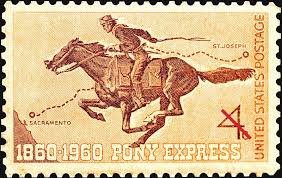
In April 1860, the Pony Express officially launched its inaugural run, embarking on a daring and ambitious journey that would cover nearly 2,000 miles of rugged terrain, harsh weather conditions, and hostile territory. The service employed a relay system of riders and horses, with stations set up along the route at intervals of approximately 10 to 15 miles. Riders would gallop at breakneck speed from one station to the next, changing horses and passing off the mail pouches in a seamless and coordinated effort to ensure the swift and safe delivery of messages.

The Pony Express route stretched from St. Joseph, Missouri, in the East to Sacramento, California, in the West, traversing a diverse and challenging landscape that included deserts, mountains, rivers, and plains. The riders faced numerous obstacles and dangers along the way, from harsh weather conditions and rough terrain to the threat of attacks by outlaws, Native American tribes, and wildlife. Despite these challenges, the Pony Express riders were known for their courage, skill, and dedication to their mission, often braving extreme conditions and risking their lives to deliver the mail on time.

One of the most remarkable aspects of the Pony Express was its speed and efficiency in delivering messages across vast distances in a fraction of the time previously required. The service boasted an impressive average delivery time of just 10 days from the East Coast to the West Coast, a significant improvement over the weeks or months it had taken traditional mail services to transport letters by stagecoach or steamship.

The Pony Express quickly captured the imagination of the American public and became a symbol of adventure, daring, and progress in the expanding frontier of the West. The service was celebrated in newspapers, dime novels, and popular culture as a testament to the pioneering spirit and ingenuity of the American people. The riders themselves became legendary figures, embodying the spirit of the Wild West and the frontier ethos of courage, determination, and resilience.

Despite its initial success and popularity, the Pony Express was ultimately short-lived, operating for just over a year before the completion of the transcontinental telegraph line in October 1861 rendered it obsolete. The telegraph, with its instant communication capabilities, quickly supplanted the Pony Express as the preferred method of transmitting messages across long distances, signaling the end of an era in mail delivery and communication in the United States.

Nevertheless, the legacy of the Pony Express lives on as a testament to the pioneering spirit and innovation of the American West. The service played a vital role in connecting the East and West coasts of the country, fostering a sense of unity and solidarity among the diverse regions of the nation. The Pony Express remains a symbol of adventure, perseverance, and the enduring quest for progress and connectivity in the history of the United States.