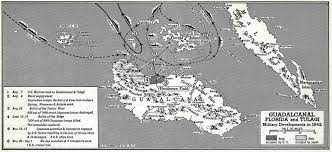
February 8, 1943, marked a critical juncture in the Battle of Guadalcanal, a pivotal campaign in the Pacific theater of World War II. By this point in the conflict, the island of Guadalcanal had become synonymous with brutal jungle warfare, intense naval battles, and strategic significance for both Allied and Japanese forces.

As February 8 dawned, the Allied forces, primarily composed of United States Marines and Army units, had been engaged in a relentless struggle to secure and defend the island against determined Japanese opposition. The battle, which had commenced with the Allied amphibious landing on August 7, 1942, had already exacted a heavy toll on both sides, with casualties mounting in the harsh jungle environment and the surrounding waters.

For the Allies, control of Guadalcanal was crucial. The island's airfield, Henderson Field, named after Marine aviator Lofton R. Henderson, provided a vital staging ground for air operations, allowing Allied aircraft to launch attacks against Japanese positions and shipping in the region. Securing Henderson Field was essential to maintaining Allied dominance in the air and denying the Japanese the ability to reinforce their troops on the island.

By February 8, the battle for Guadalcanal had entered a decisive phase. The Japanese, who had initially sought to capture the island and its strategic airfield, found themselves increasingly overstretched and vulnerable due to the prolonged nature of the campaign. Supply shortages, logistical challenges, and the tenacity of Allied resistance had taken a toll on Japanese morale and resources.

On this day, Allied forces continued their relentless pressure on Japanese positions across the island. Ground troops engaged in fierce combat amidst the dense jungle foliage, pushing back Japanese defenders and consolidating their hold on key areas. Naval and aerial operations also played a crucial role, with Allied ships and aircraft conducting patrols, reconnaissance missions, and airstrikes to disrupt Japanese supply lines and reinforce Allied positions.

The Battle of Guadalcanal had already witnessed several significant naval engagements, including the Battle of Savo Island and the Battle of Cape Esperance, which had resulted in heavy losses for both sides. However, by February 8, the balance of naval power had shifted decisively in favor of the Allies, thanks in part to superior Allied intelligence, tactics, and reinforcements.

As the day wore on, the Allied forces maintained their momentum, pressing their advantage and inflicting further losses on the retreating Japanese troops. By nightfall, it became increasingly clear that the Japanese were facing defeat on Guadalcanal. The relentless Allied offensive, combined with the dwindling Japanese supplies and manpower, left little hope for a successful Japanese counterattack or reinforcement.

Ultimately, February 8, 1943, marked a significant milestone in the Battle of Guadalcanal. While the fighting would continue for another day, it became increasingly evident that the Allies had achieved a decisive victory, securing control of the island and dealing a severe blow to Japanese expansion in the Pacific. The Battle of Guadalcanal would go down in history as one of the most grueling and consequential campaigns of World War II, demonstrating the determination and sacrifice of Allied forces in the fight against tyranny and aggression.