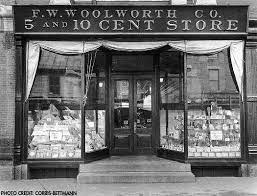
In 1879, the first Woolworth 5 Cents Store opened its doors, marking a significant milestone in the history of retailing and revolutionizing the concept of affordable goods for the masses. Founded by Frank Winfield Woolworth, the store introduced a new retail model that would shape the way Americans shopped for generations to come.

Frank Woolworth, a young entrepreneur with a keen eye for business opportunities, had previously worked in a dry goods store where he observed the popularity of selling goods at fixed prices of five cents each. Inspired by this concept, he envisioned a store where customers could purchase a variety of everyday items at a uniform price point of just five cents, making shopping accessible to people from all walks of life.

On February 22, 1879, Woolworth opened his first store in Utica, New York. The store, known simply as "Woolworth's Great Five Cent Store," offered a diverse range of merchandise, including household goods, stationery, toys, and other everyday items, all priced at just five cents each. This pricing strategy was revolutionary at the time, as it allowed customers to know exactly what they were paying for each item, eliminating the need for haggling or bargaining.

The Woolworth 5 Cents Store quickly gained popularity, attracting throngs of customers eager to take advantage of the low prices and wide selection of goods. Within a year of opening his first store, Woolworth expanded his operations, opening additional locations in neighboring cities and towns throughout New York State.

As the Woolworth chain continued to grow, Woolworth adopted innovative business practices to stay ahead of the competition. He introduced the concept of self-service, allowing customers to browse and select their own merchandise rather than relying on sales clerks. This not only reduced labor costs but also gave customers greater autonomy and convenience in their shopping experience.

By the turn of the 20th century, Woolworth had transformed his small five-and-dime store into a retail empire. The Woolworth chain had expanded to hundreds of locations across the United States, with stores in nearly every major city and town. The company's success also enabled Woolworth to diversify into other areas of retailing, including department stores and specialty shops.

The Woolworth 5 Cents Store had a profound impact on American society and culture. By offering a wide range of affordable goods at fixed prices, Woolworth helped to democratize the retail experience, making shopping accessible to people of all income levels. The store also played a significant role in shaping consumer habits, popularizing the concept of discount shopping and influencing the development of the modern retail industry.

In addition to its commercial success, Woolworth's also had a lasting legacy in the realm of architecture and urban planning. Many Woolworth stores were housed in grand, ornate buildings that served as architectural landmarks in their respective communities. The most famous example is the Woolworth Building in New York City, which was completed in 1913 and was the tallest building in the world at the time of its construction.

Despite its initial success, Woolworth's faced challenges in the latter half of the 20th century, including increased competition from discount retailers and changing consumer preferences. The company eventually closed its doors in 1997, marking the end of an era in American retailing. However, the legacy of the Woolworth 5 Cents Store lives on, as it continues to be remembered as a pioneering force in the retail industry and a symbol of innovation and entrepreneurship.