ChatGPT
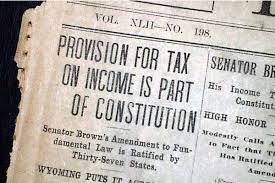
In 1913, the United States implemented a monumental shift in its fiscal policy with the introduction of federal income taxes. This marked a significant departure from the nation's previous reliance on tariffs and excise taxes to fund its operations. The genesis of this transformation can be traced back to the ratification of the 16th Amendment to the Constitution, which empowered Congress to levy taxes on income without apportionment among the states. With this newfound authority, the U.S. government embarked on a journey that would forever change the landscape of taxation and government revenue.

The roots of income taxation in the United States can be found in times of war, with temporary levies imposed during the Civil War and the Spanish-American War. However, it was not until the early 20th century that the concept gained traction as a permanent fixture of the federal tax system. The push for income taxation was driven by several factors, including the need to reduce reliance on tariffs, address growing wealth disparities, and fund the expanding role of the federal government in a rapidly industrializing nation.

The Revenue Act of 1913, signed into law by President Woodrow Wilson, laid the groundwork for the modern income tax system. Under this legislation, individuals with income above a certain threshold were required to file tax returns and pay a graduated tax based on their earnings. The initial tax rates were relatively modest, with a top marginal rate of 7% on income above $500,000 (equivalent to approximately $13 million in today's dollars). However, the introduction of income taxes represented a fundamental shift in the relationship between citizens and their government, as individuals were now directly contributing a portion of their earnings to support federal programs and initiatives.

The implementation of federal income taxes in 1913 was met with both praise and criticism. Proponents argued that it represented a fair and equitable means of generating revenue, as individuals with higher incomes bore a greater tax burden. Furthermore, it allowed the government to diversify its sources of revenue beyond tariffs, which were seen as regressive and harmful to consumers. Advocates also contended that income taxes would help address income inequality by redistributing wealth and funding social programs aimed at improving the lives of ordinary Americans.

However, opponents of income taxation raised concerns about government overreach and the potential for abuse of power. Some viewed it as a violation of individual liberties, arguing that the government had no right to confiscate a portion of their hard-earned income. Others feared that income taxes would stifle economic growth and discourage entrepreneurship by imposing higher costs on businesses and investors. Additionally, there were concerns about the complexity of the tax code and the administrative burden it placed on taxpayers and the Internal Revenue Service (IRS).

Despite these objections, federal income taxes quickly became a permanent fixture of the U.S. tax system and played a vital role in funding government operations. Over the years, the tax code has undergone numerous revisions and amendments, reflecting changing economic conditions, social priorities, and political dynamics. Today, income taxes remain a primary source of revenue for the federal government, providing funding for a wide range of programs and services, from national defense to social security.