The year 1954 marked a significant milestone in the history of nuclear weapons with the successful development and testing of the first hydrogen bomb by the United States. The hydrogen bomb, also known as the thermonuclear bomb or H-bomb, represented a quantum leap in destructive power compared to the atomic bombs dropped on Hiroshima and Nagasaki nearly a decade earlier.

The concept of the hydrogen bomb had been under development for several years, driven by the desire to create a weapon of unprecedented destructive capability. Unlike atomic bombs, which rely on nuclear fission to release energy, hydrogen bombs harness the process of nuclear fusion, the same process that powers the sun. By fusing together isotopes of hydrogen, such as deuterium and tritium, under conditions of extreme heat and pressure, hydrogen bombs unleash a catastrophic explosion many times more powerful than conventional atomic bombs.

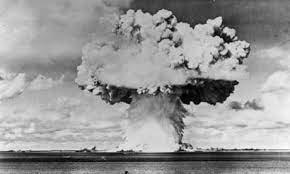
On March 1, 1954, the United States conducted the first test of a hydrogen bomb, codenamed "Castle Bravo," at the Bikini Atoll in the Pacific Ocean. The test yielded a staggering explosion with an estimated force of 15 megatons, far exceeding the expected yield and causing widespread devastation across the surrounding area. The blast created a mushroom cloud that rose to a height of more than 20 miles and generated a radioactive fallout that spread over a wide area, contaminating nearby islands and causing radiation sickness among local inhabitants and military personnel involved in the operation.

The success of the Castle Bravo test catapulted the United States into the forefront of nuclear weapons technology, establishing its supremacy in the arms race with the Soviet Union. However, the development of the hydrogen bomb also sparked widespread concern and fear about the escalating arms race and the potentially catastrophic consequences of nuclear war.

The introduction of the hydrogen bomb intensified Cold War tensions between the United States and the Soviet Union, leading to a dangerous and destabilizing arms race characterized by the rapid proliferation of nuclear weapons and the development of increasingly sophisticated delivery systems. The specter of mutual assured destruction (MAD) loomed large as both superpowers amassed vast arsenals of nuclear weapons capable of wiping out entire cities and civilizations.

The hydrogen bomb also raised profound moral and ethical questions about the role of science and technology in society and the dangers of unchecked militarism and nationalism. The sheer destructive power of the hydrogen bomb forced humanity to confront the sobering reality of its own capacity for self-annihilation and the urgent need for global cooperation and disarmament to prevent a nuclear catastrophe.

In the decades since its creation, the hydrogen bomb has continued to loom large in the collective consciousness as a symbol of humanity's capacity for destruction and the ever-present threat of nuclear war. Despite efforts to reduce nuclear arsenals and mitigate the risks of proliferation, the specter of nuclear annihilation remains a persistent and pressing challenge for policymakers, scientists, and concerned citizens around the world. As we reflect on the events of 1954 and the creation of the hydrogen bomb, we are reminded of the imperative to work tirelessly towards a future of peace, security, and nuclear disarmament for generations to come.