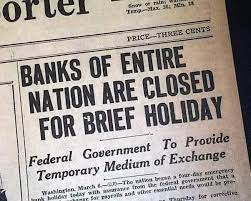
In 1933, the United States faced one of the most severe financial crises in its history, with a widespread run on banks leading to the collapse of many financial institutions and threatening the stability of the entire banking system. To address this crisis and restore confidence in the banking industry, President Franklin D. Roosevelt took decisive action by declaring a four-day "bank holiday" on March 6, 1933. This bold and unprecedented move, known as the 1933 U.S.A. Bank Holiday, played a crucial role in stabilizing the banking system and preventing further economic turmoil during the Great Depression.

The roots of the banking crisis in the early 1930s can be traced back to the stock market crash of 1929, which triggered a wave of panic among depositors who rushed to withdraw their funds from banks out of fear of losing their savings. This mass withdrawal of deposits, known as a "bank run," put immense pressure on banks, many of which were already struggling due to risky investments and poor financial management practices. As more and more banks failed, the public's confidence in the banking system eroded, leading to a vicious cycle of bank runs and further destabilization of the economy.

By the time Franklin D. Roosevelt took office as President in March 1933, the banking crisis had reached a critical point, with thousands of banks on the brink of collapse and millions of Americans at risk of losing their life savings. In his first days in office, Roosevelt recognized the urgent need to restore confidence in the banking system and prevent a complete financial meltdown. In a bold and decisive move, he announced a nationwide bank holiday, effectively shutting down all banks for four days to give the government time to assess the situation, stabilize the banking system, and implement reforms to prevent future crises.

The announcement of the bank holiday on March 6, 1933, took the nation by surprise, but it was met with widespread support from the public, who saw it as a necessary step to address the banking crisis and prevent further economic disaster. During the four-day period, banks were closed to the public, halting all financial transactions and giving regulators and government officials the opportunity to conduct a thorough examination of the banking industry and develop a plan to restore confidence in the system.

While the bank holiday initially caused some disruptions and uncertainty, it ultimately proved to be a crucial turning point in the crisis. With the banks closed, the government moved swiftly to pass emergency legislation, including the Emergency Banking Act, which provided for the reopening of solvent banks and the reorganization or closure of insolvent ones. Banks that met the government's criteria for solvency were allowed to reopen after the holiday, subject to strict regulations and oversight to ensure their stability and protect depositors' funds.

The bank holiday also gave Roosevelt and his administration the opportunity to communicate directly with the American people through radio broadcasts, reassuring them of the government's commitment to stabilizing the banking system and protecting their savings. Roosevelt's fireside chats, as they came to be known, were instrumental in calming public fears and building confidence in the government's ability to address the crisis effectively.

When the bank holiday ended on March 9, 1933, a significant number of banks across the country were able to reopen with the support of the government, restoring much-needed stability to the financial system. The decisive action taken by President Roosevelt during the 1933 U.S.A. Bank Holiday played a crucial role in preventing a complete collapse of the banking system, averting a deeper economic crisis, and laying the foundation for broader reforms to regulate and safeguard the financial industry in the years to come.