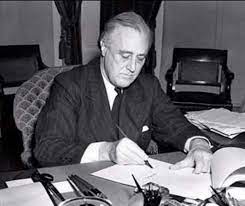
In 1941, against the backdrop of escalating global tensions and the looming threat of World War II, President Franklin D. Roosevelt signed into law the Lend-Lease Act, a landmark piece of legislation that marked a significant shift in U.S. foreign policy and paved the way for greater American involvement in the conflict. The Lend-Lease Act, officially titled "An Act to Promote the Defense of the United States," authorized the United States to provide military aid and material support to Allied nations fighting against the Axis powers, namely Nazi Germany, Italy, and Japan.

The signing of the Lend-Lease Act on March 11, 1941, represented a critical turning point in U.S. foreign policy and marked a departure from the country's policy of neutrality and non-intervention in foreign conflicts. As the war in Europe intensified and the Axis powers made significant military gains, President Roosevelt recognized the need for the United States to support its allies and bolster their defenses against the growing threat of aggression and tyranny posed by the Axis forces.

The Lend-Lease Act empowered the U.S. government to lend, lease, or otherwise provide military equipment, supplies, and other aid to Allied nations deemed vital to the defense of the United States, with the understanding that such assistance would be repaid or returned after the war. The act effectively allowed the United States to circumvent the restrictions of neutrality and provide crucial support to its allies without officially entering the conflict or declaring war on the Axis powers.

Through the Lend-Lease Act, the United States supplied vast quantities of war materiel, including aircraft, tanks, ships, ammunition, food, and other supplies, to Allied nations such as Great Britain, the Soviet Union, China, and others engaged in the fight against the Axis powers. The aid provided under the Lend-Lease program played a crucial role in bolstering the military capabilities and resilience of Allied forces, enabling them to resist Axis aggression, defend their territories, and ultimately achieve victory in the war.

The Lend-Lease Act was instrumental in strengthening U.S. alliances and partnerships with key Allied nations, forging closer ties and cooperation among countries united in the common cause of defeating totalitarianism and preserving freedom and democracy. The act symbolized America's commitment to upholding the principles of international cooperation, collective security, and mutual assistance in the face of global threats and challenges that threatened the stability and security of the world.

The impact of the Lend-Lease Act was far-reaching and profound, shaping the course of World War II and influencing the outcome of the conflict by providing critical support to Allied nations at a crucial juncture in the war. The aid and assistance provided under the Lend-Lease program were instrumental in turning the tide of the war in favor of the Allies, bolstering their military strength, logistical capacity, and resilience in the face of overwhelming odds and adversity.

The signing of the Lend-Lease Act by President Franklin D. Roosevelt in 1941 marked a pivotal moment in U.S. history and international relations, underscoring America's role as a global leader and champion of freedom, democracy, and security in the face of tyranny and aggression. The act's legacy continues to resonate today as a testament to the power of cooperation, solidarity, and mutual support in overcoming adversity and building a more peaceful, prosperous, and secure world for future generations.