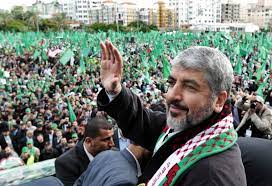
On March 29, 2006, the militant group Hamas achieved a significant political victory in the Palestinian territories by winning a majority of seats in the Palestinian Legislative Council (PLC) during the legislative elections held in the Gaza Strip and West Bank. The electoral success of Hamas marked a major turning point in Palestinian politics and raised questions about the future of the Israeli-Palestinian conflict, the prospects for peace negotiations, and the governance of the Palestinian territories.

Hamas, an Islamist political and militant organization founded in the late 1980s, had gained popularity among Palestinians for its social welfare programs, anti-corruption stance, and resistance against Israeli occupation. Despite being designated as a terrorist organization by Israel, the United States, and the European Union, Hamas presented itself as a viable alternative to the long-dominant Fatah party led by Palestinian Authority President Mahmoud Abbas.

The outcome of the 2006 Palestinian legislative elections, in which Hamas won 74 out of 132 seats in the PLC, came as a surprise to many international observers and raised concerns about the implications of having a militant group with a history of violence and extremism in a position of political power. The victory of Hamas sparked debates about the legitimacy of armed resistance, the role of Islamism in governance, and the future direction of Palestinian statehood and self-determination.

The success of Hamas in the 2006 elections was seen as a rejection of the status quo and a vote of no confidence in the Fatah-led Palestinian Authority, which was perceived as corrupt, ineffective, and compromised in its dealings with Israel. Hamas capitalized on popular discontent with the stalled peace process, economic hardship, and internal divisions within Palestinian society to present itself as a credible and principled alternative to the ruling establishment.

Following its electoral victory, Hamas faced the challenge of forming a government and navigating the complex dynamics of Palestinian politics, regional geopolitics, and international relations. The United States and the European Union, which provided significant financial aid to the Palestinian Authority, imposed sanctions on the Hamas-led government in response to its refusal to renounce violence, recognize Israel, and abide by previous agreements signed by the Palestinian leadership.

The political ascendancy of Hamas also heightened tensions between the Palestinian factions of Hamas and Fatah, leading to a power struggle, factional violence, and a de facto division of the Palestinian territories between the Hamas-controlled Gaza Strip and the Fatah-dominated West Bank. The internal rift within Palestinian society further complicated efforts to achieve unity, reconciliation, and a common approach to negotiations with Israel.

The victory of Hamas in the 2006 Palestinian legislative elections had far-reaching consequences for the Israeli-Palestinian conflict, regional stability, and the prospects for a two-state solution. The rise of Hamas to power underscored the deep-seated grievances, aspirations, and complexities of Palestinian society and highlighted the challenges of reconciling competing visions of national liberation, religious identity, and political legitimacy.