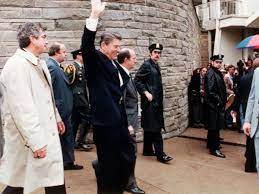
On March 30, 1981, President Ronald Reagan was shot and wounded in an assassination attempt outside the Washington Hilton Hotel in Washington, D.C. The shooting sent shockwaves through the nation and raised concerns about the safety of public officials, the mental health system, and the potential for political violence in the United States.

President Reagan had been in office for less than three months when the assassination attempt took place. As he exited the hotel after delivering a speech to a labor conference, John Hinckley Jr., a mentally disturbed individual with a history of stalking actress Jodie Foster, opened fire on the president with a .22 caliber revolver. Reagan was struck by a bullet that ricocheted off the presidential limousine and lodged in his lung.

The quick actions of Secret Service agents and other bystanders helped to subdue Hinckley and rush President Reagan to George Washington University Hospital for emergency surgery. Despite the seriousness of his injuries, Reagan remained conscious and even joked with the medical staff during his treatment. The successful surgery to remove the bullet from his lung and repair the damage helped save his life.

The assassination attempt on President Reagan had profound implications for the nation, the presidency, and the public perception of political violence. The incident highlighted the vulnerability of public officials to acts of violence and the need for increased security measures to protect the president and other leaders. It also sparked debates about gun control, mental health treatment, and the motives behind political assassinations.

John Hinckley Jr., the would-be assassin, was found not guilty by reason of insanity and was committed to a psychiatric hospital for treatment. The case raised questions about the adequacy of mental health care in the United States and the ability of individuals with severe mental illness to access treatment before resorting to violence. The Hinckley case also prompted changes in laws regarding the insanity defense and the treatment of individuals deemed a threat to themselves or others.

President Reagan's recovery from the assassination attempt was seen as a testament to his resilience, optimism, and ability to connect with the American people. His popularity and leadership style helped to reassure the nation in the aftermath of the shooting and solidified his image as a strong and charismatic leader. Reagan's ability to maintain his sense of humor and positive attitude during his hospitalization endeared him to many Americans and reinforced his reputation as the "Great Communicator."

The assassination attempt on President Reagan also led to increased security measures for public officials and changes in the Secret Service's protective protocols. The incident served as a wake-up call for the need to enhance security procedures and intelligence gathering to prevent future attacks on political leaders. It also underscored the importance of bipartisan unity and national solidarity in times of crisis.