In 1945, the United States launched a major military operation in the Pacific Theater of World War II with the landing of American forces on the island of Okinawa. The Battle of Okinawa, which took place from April to June 1945, was one of the bloodiest and most significant engagements of the war, marking a crucial turning point in the Allied campaign against Imperial Japan and paving the way for the eventual defeat of the Japanese Empire.

The decision to invade Okinawa was driven by strategic considerations and the need to secure a staging area for the planned invasion of the Japanese home islands. Okinawa, located in the Ryukyu Islands chain, was deemed a critical target due to its strategic location and airfield facilities, which could be used to launch bombing raids on Japan and support the Allied advance towards the Japanese mainland.

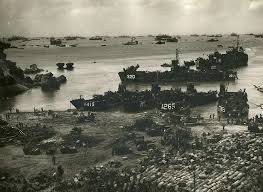
On April 1, 1945, American forces, under the command of General Simon Bolivar Buckner Jr., launched Operation Iceberg, the amphibious assault on Okinawa. The operation involved a massive naval and air bombardment of the island followed by the landing of U.S. Marines and Army troops on the beaches of Okinawa. The initial phase of the invasion was met with fierce resistance from Japanese defenders, who were determined to hold onto the island at all costs.

The Battle of Okinawa quickly devolved into a brutal and protracted struggle, characterized by intense combat, heavy casualties, and widespread destruction. The rugged terrain, fortified defenses, and determined Japanese resistance posed significant challenges for the American forces, leading to some of the fiercest fighting of the war. The battle also saw the extensive use of kamikaze attacks by Japanese pilots, who targeted Allied ships with suicide missions in a desperate attempt to repel the invasion.

Despite the ferocity of the Japanese defense, American forces gradually gained ground and pushed inland, capturing key objectives and strategic positions on the island. The Battle of Okinawa was marked by significant casualties on both sides, with tens of thousands of Allied and Japanese soldiers killed or wounded in the fighting. Civilians on Okinawa also suffered greatly during the battle, enduring widespread destruction, displacement, and hardship as a result of the conflict.

The Battle of Okinawa came to a decisive conclusion in June 1945, when American forces secured the island after months of bitter fighting. The capture of Okinawa provided the Allies with a crucial forward base for air and naval operations against Japan and positioned them for the final assault on the Japanese home islands. The battle also underscored the tenacity and sacrifice of both American and Japanese forces, as well as the devastating toll of war on soldiers and civilians caught in the crossfire.

The Battle of Okinawa had far-reaching consequences for the course of World War II and the eventual outcome of the conflict. The capture of Okinawa set the stage for the planned invasion of Japan, which was averted by the Japanese surrender following the atomic bombings of Hiroshima and Nagasaki in August 1945. The Battle of Okinawa also highlighted the human cost of war and the need for reconciliation and peace in the aftermath of conflict.