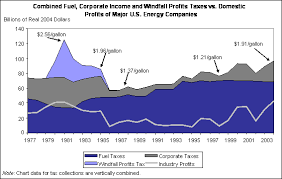
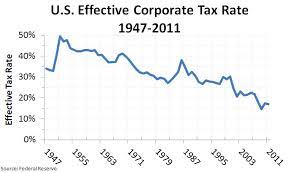
In 1980, the United States Congress passed the Windfall Profits Tax Act, a landmark piece of legislation aimed at addressing the windfall profits earned by the oil industry in the wake of the 1979 energy crisis. The Windfall Profits Tax Act was a response to the surge in oil prices following the Iranian Revolution and the resulting disruption in global oil markets, which had led to record profits for oil companies and concerns about the fairness and equity of their earnings.

The 1980 Windfall Profits Tax Act targeted the excessive profits earned by oil companies by imposing a tax on their windfall gains above a certain threshold. The legislation was designed to capture a portion of the extraordinary profits generated by oil companies as a result of the spike in oil prices, which had been driven by geopolitical events, supply disruptions, and market speculation.

Under the Windfall Profits Tax Act, oil companies were required to pay a tax on the difference between the market price of oil and a base price established by the government. The tax rate varied depending on the level of profits earned by the companies, with higher rates applied to larger windfall profits. The goal of the tax was to recapture a portion of the excess profits earned by oil companies and redistribute them to the government for use in energy conservation, alternative energy development, and other public purposes.

The Windfall Profits Tax Act was a contentious and divisive issue, with supporters arguing that it was necessary to prevent price gouging, protect consumers from excessive fuel costs, and ensure that oil companies paid their fair share of taxes on windfall profits. Proponents of the tax also contended that it would help reduce the country's dependence on foreign oil, promote energy conservation, and encourage investment in renewable energy sources.

Opponents of the Windfall Profits Tax Act, however, criticized it as a punitive and counterproductive measure that would discourage domestic oil production, reduce investment in exploration and development, and hinder economic growth in the energy sector. Critics argued that the tax would distort market incentives, stifle innovation, and lead to higher energy prices for consumers, as oil companies passed on the cost of the tax to consumers through higher fuel prices.

The Windfall Profits Tax Act had a mixed impact on the oil industry and the economy as a whole. While the tax succeeded in generating significant revenue for the government and curbing the windfall profits of oil companies, it also had unintended consequences, such as reducing domestic oil production, increasing imports of foreign oil, and limiting investment in new energy projects.

Over time, the Windfall Profits Tax Act faced criticism for its complexity, inefficiency, and unintended consequences, leading to calls for its repeal or reform. In 1988, the tax was ultimately repealed by Congress, ending its nearly decade-long existence and signaling a shift in energy policy towards market-based solutions and deregulation in the oil industry.

The legacy of the Windfall Profits Tax Act of 1980 remains a subject of debate and analysis in the energy policy and taxation fields. The act represented a significant attempt to address the windfall profits of the oil industry and redistribute wealth in the energy sector, but its effectiveness, fairness, and long-term impact continue to be scrutinized and debated by policymakers, economists, and industry stakeholders. The Windfall Profits Tax Act serves as a reminder of the complexities and trade-offs involved in regulating industries, managing economic shocks, and balancing the interests of stakeholders in a dynamic and interconnected global economy.