In 1970, the United States made a controversial decision to invade Cambodia as part of its military operations during the Vietnam War. The invasion of Cambodia marked a significant escalation of U.S. involvement in Southeast Asia and sparked widespread protests and opposition both at home and abroad, leading to a period of heightened tension and conflict during a tumultuous chapter in American history.

The decision to invade Cambodia was made by President Richard Nixon in an effort to disrupt supply routes used by North Vietnamese forces and Viet Cong guerrillas, who were using the border regions of Cambodia as safe havens to launch attacks into South Vietnam. The incursion into Cambodia, known as Operation Menu and later as Operation Freedom Deal, was launched without the knowledge or consent of the Cambodian government, leading to concerns about the violation of Cambodian sovereignty and the potential for further destabilization in the region.

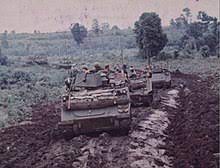
On April 30, 1970, President Nixon announced the invasion of Cambodia in a televised address to the nation, justifying the military action as a necessary measure to protect American troops and combat the spread of communism in Southeast Asia. The invasion involved the deployment of U.S. ground forces, artillery, and air power into Cambodian territory, with the goal of targeting North Vietnamese and Viet Cong forces and disrupting their operations along the Ho Chi Minh Trail, a key supply route used by the enemy to transport troops and supplies.

The invasion of Cambodia sparked immediate backlash and condemnation from anti-war activists, students, and political leaders who saw the escalation of U.S. military operations as a dangerous and unjustified move that would only prolong the conflict and deepen the suffering of the Cambodian people. Protests erupted on college campuses and city streets across the country, with demonstrators calling for an end to the war in Vietnam and the withdrawal of U.S. forces from Southeast Asia.

The invasion of Cambodia also had profound consequences for the political landscape in the United States, leading to a crisis of confidence in the government and a growing sense of disillusionment among the American public. The decision to expand the war into Cambodia further divided the nation along ideological and generational lines, with many Americans questioning the wisdom and morality of U.S. military intervention in a distant and complex conflict that seemed to have no clear end in sight.

The invasion of Cambodia also had devastating consequences for the Cambodian people, who were caught in the crossfire of the conflict and suffered greatly as a result of the fighting and instability caused by the presence of foreign troops on their soil. The incursion into Cambodia exacerbated existing political and social tensions within the country, leading to a power vacuum that was quickly exploited by the genocidal regime of the Khmer Rouge, which would go on to commit atrocities on a massive scale and plunge Cambodia into a period of darkness and despair.