In 1971, the United States was embroiled in the Vietnam War, a conflict that had sparked widespread protests and demonstrations against U.S. military involvement in Southeast Asia. On May 3, 1971, anti-war demonstrators in Washington, D.C. were arrested in a mass protest against the Vietnam War, highlighting the deep divisions within American society over the controversial conflict and the government's handling of the war effort. The arrest of anti-war demonstrators in 1971 was a pivotal moment in the anti-war movement, underscoring the growing opposition to the Vietnam War and the willingness of activists to engage in civil disobedience to express their dissent.

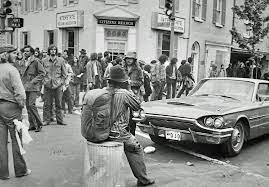
The anti-war movement in the United States had been gaining momentum throughout the 1960s, as public opposition to the Vietnam War grew in response to mounting casualties, escalating violence, and the perceived lack of progress in achieving U.S. objectives in Southeast Asia. Anti-war activists, including students, veterans, and community organizers, organized protests, rallies, and acts of civil disobedience to voice their opposition to the war and call for an end to U.S. military involvement in Vietnam. The protest on May 3, 1971, in Washington, D.C. was a culmination of these efforts, as thousands of demonstrators gathered to demand an immediate withdrawal of U.S. troops from Vietnam.

The arrest of anti-war demonstrators in Washington, D.C. on May 3, 1971, was a highly charged and contentious event that drew national attention to the growing opposition to the Vietnam War. As protesters marched through the streets of the nation's capital, they were met with a heavy police presence and clashes with law enforcement officers, leading to a series of arrests and confrontations between demonstrators and authorities. The arrests of anti-war activists symbolized the government's efforts to suppress dissent and maintain order in the face of mounting public opposition to the war.

The arrest of anti-war demonstrators in 1971 sparked a debate about the limits of free speech, civil disobedience, and the role of dissent in a democratic society. Critics of the government's response to the protests argued that the arrests infringed on the constitutional rights of demonstrators to peacefully assemble and express their opposition to government policies, while supporters of law enforcement maintained that the arrests were necessary to maintain public order and uphold the rule of law. The arrest of anti-war activists in Washington, D.C. highlighted the deep divisions within American society over the Vietnam War and the government's handling of the conflict, as well as the ongoing struggle to balance national security concerns with individual freedoms and civil liberties.

The events of May 3, 1971, in Washington, D.C. served as a stark reminder of the challenges and complexities of political dissent in a time of war, as anti-war activists clashed with authorities in a demonstration of their opposition to the Vietnam War. The arrests of anti-war demonstrators underscored the power of civil disobedience as a tool for social change and political expression, as well as the risks and consequences of challenging government policies and actions through protest and direct action. The arrest of anti-war activists in 1971 was a pivotal moment in the anti-war movement, fueling further protests, rallies, and acts of civil disobedience in the years that followed as public opposition to the Vietnam War continued to grow.