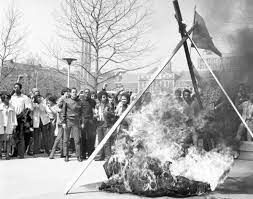
In 1969, the United States was in the midst of a tumultuous period marked by social unrest, political upheaval, and widespread protests against the Vietnam War, civil rights injustices, and a host of other issues. Student protesters played a central role in this era of activism, using their voices, bodies, and collective power to challenge the status quo, demand change, and push for a more just and equitable society. The student protesters of 1969 were a diverse and dynamic group, representing a wide range of backgrounds, beliefs, and causes, but united by a shared sense of urgency and determination to make their voices heard.

The student protesters of 1969 were driven by a deep sense of dissatisfaction with the political establishment, the social injustices of the time, and the ongoing conflict in Vietnam. Students across the country organized rallies, sit-ins, marches, and other forms of protest to express their opposition to the war, racism, sexism, and other forms of oppression that they saw as pervasive in American society. The student protesters of 1969 were at the forefront of a broader movement for social change that sought to challenge entrenched power structures, advocate for marginalized communities, and promote a more inclusive and equitable vision of America.

One of the most significant issues that galvanized student protesters in 1969 was the Vietnam War, which had been raging for years and claimed the lives of thousands of American soldiers and countless Vietnamese civilians. Students across the country mobilized against the war, organizing teach-ins, demonstrations, and acts of civil disobedience to demand an end to U.S. military involvement in Southeast Asia. The anti-war movement of 1969 was a powerful force for change, bringing together students, activists, and community members in a unified call for peace, justice, and accountability.

In addition to the anti-war movement, student protesters in 1969 also focused their efforts on issues such as civil rights, women's rights, environmental protection, and campus reform. Students of color led protests against racial discrimination and segregation, demanding equal rights, opportunities, and representation in education and society. Women students organized rallies and marches to advocate for gender equality, reproductive rights, and an end to sexism and discrimination. Environmental activists protested against pollution, deforestation, and other forms of environmental degradation, calling attention to the urgent need for conservation and sustainability.

The tactics employed by student protesters in 1969 were varied and creative, ranging from peaceful sit-ins and marches to more confrontational actions such as campus takeovers and street demonstrations. Students used their bodies, voices, and organizational skills to disrupt the status quo, challenge authority, and draw attention to the pressing issues of the day. The student protesters of 1969 were fearless, passionate, and committed to making a difference, even in the face of opposition, violence, and repression.

The legacy of the student protesters of 1969 is profound and enduring, as their efforts helped to shape the course of American history and inspire future generations of activists and changemakers. The protests of 1969 brought attention to critical issues such as the Vietnam War, civil rights, women's rights, and environmental protection, helping to shift public opinion, influence policy decisions, and create lasting social change. The student protesters of 1969 demonstrated the power of collective action, the importance of speaking truth to power, and the enduring value of activism in advancing social justice and equality.