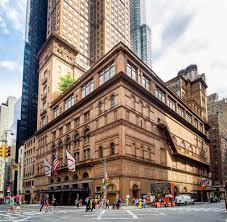
In 1891, one of the most iconic and prestigious music venues in the United States, Carnegie Hall, opened its doors in New York City. Built by the philanthropist and industrialist Andrew Carnegie, Carnegie Hall quickly became a cultural landmark and a symbol of artistic excellence, hosting some of the world\'s most renowned musicians, performers, and artists. The history of Carnegie Hall is a testament to the enduring power of music, culture, and community, and its legacy continues to inspire and enrich audiences from around the world.

Andrew Carnegie, a Scottish-American industrialist and philanthropist, envisioned Carnegie Hall as a place where music and the arts could flourish and be accessible to all members of society. Carnegie believed in the transformative power of music and culture to uplift and inspire individuals, and he sought to create a space that would serve as a hub for artistic expression and creativity. Carnegie Hall was designed by architect William Tuthill and featured a grand auditorium with impeccable acoustics, making it an ideal venue for concerts, recitals, and performances of all kinds.

On May 5, 1891, Carnegie Hall officially opened its doors to the public with a performance by the New York Symphony Orchestra, conducted by Walter Damrosch. The inaugural concert was a resounding success, and Carnegie Hall quickly established itself as a premier destination for music lovers and performers alike. Over the years, Carnegie Hall has hosted a wide range of musical genres and styles, from classical and opera to jazz, folk, and contemporary music, showcasing the diversity and richness of the American musical landscape.

Carnegie Hall has been graced by the presence of some of the world\'s most celebrated musicians and performers, including renowned conductors like Leonard Bernstein, Arturo Toscanini, and Gustav Mahler, as well as legendary composers such as Pyotr Ilyich Tchaikovsky, Igor Stravinsky, and George Gershwin. The stage of Carnegie Hall has been a platform for countless historic performances and memorable moments in music history, cementing its reputation as a mecca for musical excellence and artistic innovation.

In addition to its stellar lineup of musical performances, Carnegie Hall has also been a hub for cultural and social events, hosting lectures, exhibitions, and community programs that engage and enrich audiences of all ages and backgrounds. Carnegie Hall\'s commitment to education and outreach has led to the creation of programs such as the Weill Music Institute, which provides music education and mentorship opportunities to young musicians and underserved communities.

Carnegie Hall\'s enduring legacy as a cultural institution and a beacon of artistic excellence is a testament to the vision and generosity of Andrew Carnegie, who believed in the power of music to enrich and enlighten the human spirit. Carnegie Hall stands as a testament to the enduring power of music, culture, and community to unite and inspire individuals from all walks of life. As Carnegie Hall continues to thrive and evolve in the 21st century, it remains a symbol of artistic excellence, cultural diversity, and creative innovation, embodying the timeless values of creativity, collaboration, and the transformative power of the arts.