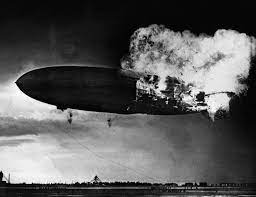
On May 6, 1937, the airship Hindenburg, one of the most iconic and luxurious modes of transportation of its time, met a tragic end when it caught fire and crashed while attempting to land at the Naval Air Station Lakehurst in New Jersey. The Hindenburg disaster, as it came to be known, remains one of the most infamous aviation accidents in history, capturing the attention of the world and marking the end of the era of passenger airships. The events of that fateful day on May 6, 1937, would forever change the perception of air travel and the safety of lighter-than-air aircraft.

The Hindenburg airship, named after the late German President Paul von Hindenburg, was a marvel of engineering and design, measuring over 800 feet in length and filled with highly flammable hydrogen gas. Operated by the German Zeppelin Company, the Hindenburg was a symbol of luxury and sophistication, offering transatlantic flights between Europe and the United States in an era before commercial jet travel. The Hindenburg was equipped with luxurious amenities, including private cabins, a dining room, a lounge, and a promenade deck, making it a popular choice for wealthy travelers and dignitaries.

On the evening of May 6, 1937, the Hindenburg was en route from Frankfurt, Germany, to Lakehurst, New Jersey, carrying 97 passengers and crew members on board. As the airship prepared to land at the naval air station, disaster struck when a spark ignited the highly flammable hydrogen gas that filled the Hindenburg\'s gas cells. Within seconds, the Hindenburg was engulfed in flames, causing a massive fireball that illuminated the night sky and sent shockwaves through the surrounding area.

The horrific scene of the Hindenburg disaster was captured on film and in photographs, documenting the chaos and devastation as the airship rapidly descended to the ground in a fiery inferno. The intense heat and flames consumed the Hindenburg\'s structure, causing it to collapse in a matter of seconds and resulting in the tragic loss of 36 lives, including passengers, crew members, and ground personnel. The survivors of the disaster recounted harrowing tales of escape and heroism, as they struggled to flee the burning wreckage and assist those in need amidst the chaos and confusion.

The cause of the Hindenburg disaster has been the subject of much speculation and investigation over the years. While the exact trigger of the fire remains unknown, theories suggest that a combination of factors, including a static electricity discharge, a gas leak, or sabotage, may have contributed to the ignition of the hydrogen gas. The Hindenburg disaster prompted a reevaluation of the safety of airships and led to the eventual decline of the use of hydrogen gas as a lifting agent in lighter-than-air aircraft.

The Hindenburg disaster had a profound impact on the public perception of air travel and the future of airships as a mode of transportation. The tragic loss of life and the dramatic images of the burning airship brought into question the safety and viability of passenger airships, leading to a decline in their use and the eventual end of the era of the great airships. The events of May 6, 1937, serve as a somber reminder of the risks and challenges inherent in aviation and the importance of safety and vigilance in the pursuit of progress and innovation in air travel.