27 June 1969: Stonewall Riots Launch LGBTQ Rights Movement
On June 27, 1969, police raided the Stonewall Inn, a gay bar in New York Citys Greenwich Village, sparking a series of spontaneous protests that would mark a turning point in the fight for LGBTQ rights in America. The Stonewall Riots, as they came to be known, transformed a marginalized community into a powerful political movement and launched the modern era of gay liberation.
Police raids on gay bars were common in 1960s America, where homosexuality was criminalized in most states and gay establishments operated in a legal gray zone. The Stonewall Inn, like many gay bars of the era, was run by organized crime and regularly paid off police to avoid raids. When officers arrived in the early morning hours of June 28, patrons were accustomed to the routine of checking identification and being released. But this time, something different happened.
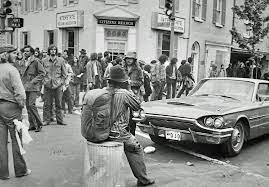
Instead of dispersing quietly, the crowd that gathered outside the bar began to resist. Accounts vary about who threw the first punch or bottle, but the anger that had built up over years of harassment and discrimination erupted into open confrontation. Police barricaded themselves inside the bar as the crowd outside grew into the hundreds, throwing bottles, coins, and debris.
The initial confrontation lasted into the early morning hours, but the protests continued for several more nights. Each evening, thousands of people gathered in the streets around the Stonewall Inn, confronting police and openly declaring their identities. Chants of Gay Power echoed through the streets, as participants refused to return to the shadows.
The impact of Stonewall was immediate and far-reaching. Within months, gay rights organizations were founded in cities across the country, taking a more confrontational approach than their predecessors. The following year, the first Gay Pride marches were held in New York, Los Angeles, San Francisco, and Chicago, commemorating the anniversary of the riots. These marches evolved into the Pride celebrations that now take place worldwide each June.
The Stonewall Riots did not achieve immediate legal victories, but they fundamentally changed the way LGBTQ people saw themselves and were seen by society. The site of the Stonewall Inn was designated a National Historic Landmark in 2000 and became a National Monument in 2016, recognizing its significance in the ongoing struggle for civil rights and human dignity.