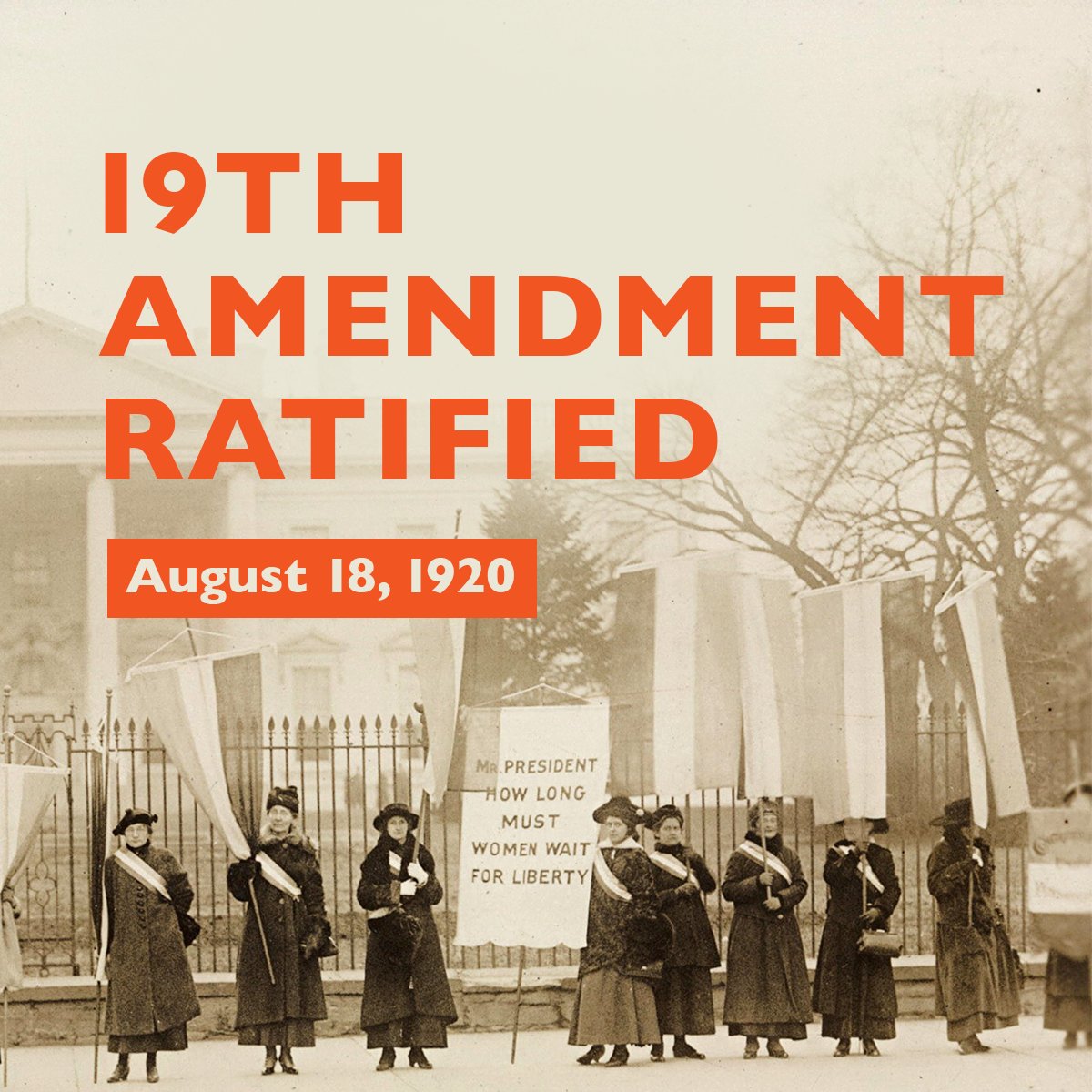
On August 18, 1920, a significant milestone in American history was reached with the ratification of the 19th Amendment to the United States Constitution. The 19th Amendment granted women the right to vote, a hard-fought victory in the struggle for gender equality and a significant step forward in expanding democratic participation in the country.

The journey towards women's suffrage in the United States was a long and arduous one. For decades, women had been advocating for their right to vote, arguing for equal political representation and the recognition of their citizenship. Activists like Susan B. Anthony, Elizabeth Cady Stanton, and Alice Paul dedicated their lives to the cause, organizing protests, lobbying lawmakers, and raising awareness about the importance of women's suffrage.

The 19th Amendment, which states, "The right of citizens of the United States to vote shall not be denied or abridged by the United States or by any State on account of sex," was first introduced to Congress in 1878. However, it took over four decades of tireless activism and advocacy before it was finally ratified.

The ratification of the 19th Amendment was a result of persistent grassroots efforts and a shifting societal landscape. Women's suffrage movements gained momentum in the early 20th century, and public opinion began to shift in favor of granting women the right to vote. Suffragettes organized marches, hunger strikes, and protests, facing opposition, ridicule, and even violence in their quest for equality.

The final push for the ratification of the 19th Amendment came in the form of the Women's Suffrage Movement, which gained significant traction in the early 1910s. The movement's leaders, such as Alice Paul and Carrie Chapman Catt, employed strategic lobbying, public demonstrations, and political pressure to advocate for the amendment's passage.

After years of persistent activism, the amendment finally received the necessary support for ratification. On August 18, 1920, Tennessee became the 36th state to ratify the 19th Amendment, reaching the required three-fourths majority of states needed for it to become law. This historic moment marked a turning point in the fight for women's rights and represented a significant victory for gender equality in the United States.

The ratification of the 19th Amendment had profound implications for American society. It expanded the democratic process by granting women the right to vote, allowing them to participate fully in political decision-making and shaping the future of the nation. It paved the way for increased gender equality, challenging traditional gender roles and societal expectations.

The impact of the 19th Amendment extended beyond voting rights. It inspired subsequent generations of women to pursue careers in politics, law, and activism, breaking down barriers and challenging gender discrimination. The amendment also played a crucial role in the broader fight for civil rights, as it laid the foundation for future movements seeking equality and justice.

However, it is important to note that the 19th Amendment did not guarantee equal voting rights for all women. Barriers such as discriminatory voter registration practices, poll taxes, and literacy tests continued to disproportionately affect minority women, particularly African American women, who faced additional obstacles to exercising their right to vote.