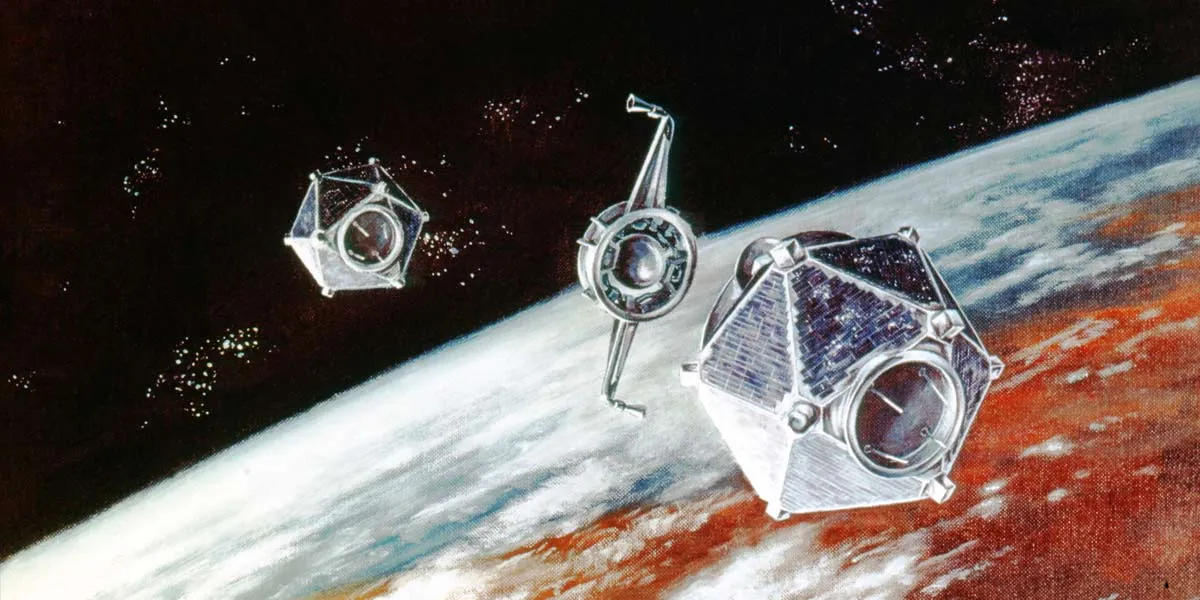
In 1979, the American-run Vela satellite detected a series of bright flashes over the Indian Ocean, sparking intrigue and speculation about their origin and potential implications. The incident, known as the Vela Incident or the Vela Flashes, remains shrouded in mystery and controversy to this day.

The Vela satellite was a surveillance satellite jointly operated by the United States Air Force and the Advanced Research Projects Agency (ARPA). Its primary mission was to monitor nuclear activity around the world, particularly the detection of nuclear explosions. Equipped with sensors designed to detect the characteristic double flash produced by a nuclear detonation, the Vela satellite played a crucial role in monitoring compliance with the Limited Test Ban Treaty.

On September 22, 1979, while orbiting above the Indian Ocean, the Vela satellite detected a series of double flashes consistent with a nuclear explosion. The location of the flashes was determined to be near the Prince Edward Islands, a remote area between South Africa and Antarctica.

The detection of the flashes immediately raised concerns and triggered a response from the United States government. An investigation was launched to determine the source and nature of the event. However, despite extensive analysis and inquiries, no conclusive evidence was ever found to definitively identify the cause of the flashes.

One prevailing theory was that the flashes were the result of a nuclear test conducted by South Africa. At the time, South Africa was known to possess a covert nuclear weapons program, which it later admitted to. However, no concrete proof linking the Vela Incident to South Africa's nuclear activities was ever uncovered.

Other theories suggested that the flashes could have been caused by a meteoroid impact or a satellite malfunction. However, these explanations were also subject to debate and lacked substantial evidence to support them.

The Vela Incident had significant geopolitical implications as well. The possibility of a nuclear explosion in the vicinity of the Indian Ocean raised concerns about nuclear proliferation and the potential destabilization of the region. It also fueled tensions between various nations and drew attention to the issue of nuclear non-proliferation.

The incident led to increased international efforts to monitor and prevent nuclear weapons testing. The United States and other countries intensified their surveillance capabilities and worked towards strengthening the international framework for nuclear non-proliferation.

Decades after the Vela Incident, the true cause of the flashes remains unknown. The lack of definitive evidence has perpetuated speculation and conspiracy theories, with some suggesting that the incident was intentionally covered up by governments involved. The secrecy surrounding the incident has only added to its mystique and intrigue.

The Vela Incident of 1979 stands as a reminder of the challenges and complexities involved in monitoring nuclear activity and ensuring global security. It serves as a testament to the importance of international cooperation and transparency in addressing nuclear proliferation concerns. While the true nature of the Vela flashes may never be fully revealed, their impact on global nuclear policies and the ongoing pursuit of disarmament and non-proliferation efforts cannot be understated.