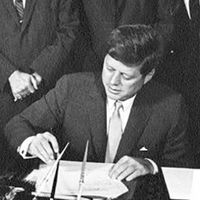
On September 22, 1961, the Peace Corps was established by an executive order signed by President John F. Kennedy. This momentous occasion marked the beginning of a new era in international volunteerism and cultural exchange, as the Peace Corps aimed to promote peace and friendship by sending American volunteers to serve in developing countries around the world.

The idea for the Peace Corps was first introduced by President Kennedy during his presidential campaign in 1960. He envisioned a program that would allow American citizens to contribute their skills and expertise to communities in need, fostering mutual understanding and cooperation on a global scale. The establishment of the Peace Corps reflected Kennedy's belief in the power of individuals to make a positive difference and his commitment to public service.

The Peace Corps was designed to address various development needs in the countries it served, including education, healthcare, agriculture, and community development. Volunteers, typically young adults, would spend two years living and working in communities abroad, immersing themselves in local cultures and collaborating with local partners to implement sustainable projects.

The early years of the Peace Corps were marked by enthusiasm and a sense of idealism. Thousands of Americans eagerly applied to become volunteers, motivated by a desire to contribute to global development and bridge cultural divides. By the end of 1961, the Peace Corps had sent its first group of volunteers to Ghana and Tanganyika (now Tanzania).

Throughout its history, the Peace Corps has made significant contributions to the countries it serves. Volunteers have engaged in a wide range of activities, from teaching English and promoting literacy to implementing public health initiatives and supporting agricultural development. They have worked alongside local communities, fostering cross-cultural understanding and forging lasting friendships.

The impact of the Peace Corps extends beyond the individual volunteers and the communities they serve. The program has played a vital role in promoting a positive image of the United States abroad, showcasing American values and goodwill. It has also facilitated the exchange of ideas and knowledge, fostering a deeper understanding of different cultures and perspectives.

Over the years, the Peace Corps has faced various challenges and adaptations. It has responded to changing global needs and evolving development paradigms. The program has expanded to include new countries and sectors, such as environmental conservation and information technology. It has also prioritized the inclusion of diverse volunteers, ensuring that the Peace Corps reflects the rich diversity of the United States.

The Peace Corps has had a lasting impact on the lives of countless volunteers and the communities they have served. Many returned volunteers have gone on to pursue careers in public service, international development, and diplomacy, carrying with them the values and experiences gained during their Peace Corps service.

As the Peace Corps celebrates its sixtieth anniversary in 2021, it continues to be a symbol of hope, cooperation, and global citizenship. It remains committed to its founding principles of promoting peace and friendship through meaningful engagement and service. The Peace Corps stands as a testament to the power of individuals to make a difference and the importance of fostering understanding and empathy in an increasingly interconnected world.