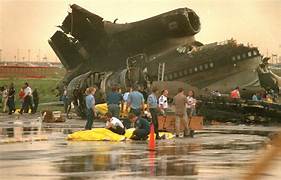
On October 31, 1999, the United States experienced a tragic plane crash that claimed the lives of all 217 people on board. This devastating incident, known as the EgyptAir Flight 990 crash, sent shockwaves through the aviation industry and left a lasting impact on the families of the victims and the broader community.

EgyptAir Flight 990 was a regularly scheduled international flight from New York City's John F. Kennedy International Airport to Cairo, Egypt. The Boeing 767 aircraft was carrying passengers and crew members from various nationalities, including Egyptians, Americans, and individuals from several other countries.

The flight departed New York City in the evening and was cruising at an altitude of 33,000 feet over the Atlantic Ocean when tragedy struck. Approximately 30 minutes after takeoff, the aircraft suddenly entered a steep descent, plummeting towards the ocean. Efforts by the flight crew to regain control were unsuccessful, and the plane crashed into the waters off the coast of Nantucket Island, Massachusetts.

In the aftermath of the crash, investigators from the National Transportation Safety Board (NTSB) and other international agencies launched an extensive investigation to determine the cause of the accident. The probe involved analyzing the flight data recorder and cockpit voice recorder, conducting interviews with witnesses and experts, and examining the wreckage.

The investigation ultimately revealed a contentious and complex set of circumstances surrounding the crash. Initial findings suggested that the aircraft's co-pilot had intentionally caused the plane to descend rapidly, leading to the crash. However, this conclusion was met with skepticism and controversy, as Egyptian authorities disputed the theory of intentional pilot action.

The differing interpretations of the crash led to a significant rift between the Egyptian and American investigators, with each side presenting their own theories and supporting evidence. The lack of conclusive evidence and the political tensions surrounding the investigation complicated the process and made it difficult to ascertain the exact cause of the crash.

The EgyptAir Flight 990 crash had profound implications for the aviation industry. It highlighted the need for improved pilot training, crew coordination, and communication protocols. The incident also prompted discussions about mental health assessments for pilots and the importance of addressing any potential psychological issues that may impact flight safety.

The tragedy deeply affected the families and loved ones of the victims, who were left to grapple with the sudden loss of their loved ones. The crash also had a lasting impact on the communities surrounding Nantucket Island, as recovery efforts were launched to retrieve the wreckage and provide support to those affected.