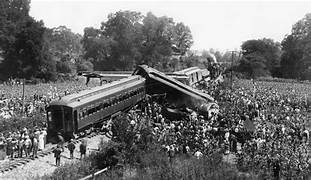
In 1918, the United States experienced a catastrophic rail crash that resulted in significant loss of life and highlighted the need for improved safety measures within the country's railway system. This tragic incident, known as the Nashville, Tennessee train disaster, remains one of the deadliest rail accidents in U.S. history.

On July 9, 1918, two passenger trains, the Nashville Express and the Memphis Special, collided head-on near Nashville, Tennessee. The Nashville Express, traveling southbound from Louisville, Kentucky, and the Memphis Special, heading northbound from Memphis, Tennessee, were both carrying a substantial number of passengers.

The collision occurred on a single-track section of the Nashville, Chattanooga and St. Louis Railway, known as the "Dutchman's Curve." This curve was notorious for its sharp turns and limited visibility, making it a hazardous section for train operations.

The exact cause of the crash remains unclear, as there were no survivors to provide firsthand accounts. However, it is believed that a combination of factors contributed to the tragedy. The lack of modern signaling systems, inadequate communication between train crews, and human error likely played a significant role in the collision.

The impact of the crash was devastating. The collision resulted in a massive fire that engulfed both trains, making rescue efforts incredibly challenging. It is estimated that at least 101 people lost their lives in the accident, with many others suffering severe injuries. The victims included passengers, crew members, and railroad employees.

In the aftermath of the Nashville train disaster, investigations were launched to determine the cause and identify ways to prevent similar incidents in the future. The crash prompted a push for improved safety measures within the railway industry, including the implementation of standardized signaling systems, stricter regulations, and enhanced training for train crews.

The tragedy also led to a broader recognition of the need for comprehensive safety reforms in the transportation sector. It highlighted the importance of prioritizing passenger safety and prompted discussions about the role of government oversight in ensuring the well-being of those using public transportation.

The Nashville train disaster had a profound impact on the families of the victims and the communities affected by the crash. It served as a stark reminder of the risks associated with rail travel and the importance of implementing adequate safety measures. The incident also fueled public demand for accountability and prompted changes in railway operations to prevent similar tragedies from occurring in the future.