In the annals of American history, the 1993 World Trade Center bombing stands out as a pivotal moment, marking the country's first encounter with the specter of large-scale terrorism on its own soil. On February 26, 1993, a meticulously planned and executed terrorist attack shook the very foundations of the United States, as a massive car bomb detonated in the underground parking garage of the World Trade Center in New York City.

The plot was orchestrated by a group of Islamist extremists, primarily consisting of individuals affiliated with or inspired by radical cleric Omar Abdel Rahman, known as the "Blind Sheikh," who preached at the Al-Farooq Mosque in Brooklyn. This nefarious plot aimed to topple one of America's most iconic symbols of economic prowess and global influence.

The perpetrators, including Ramzi Yousef and Eyad Ismoil, meticulously planned the attack, renting a van, purchasing chemicals, and constructing a massive bomb with the intent of causing catastrophic damage. On that fateful day, the terrorists drove the rental van into the underground parking garage of the North Tower of the World Trade Center and detonated a 1,200-pound urea nitrate–hydrogen gas-enhanced explosive device.

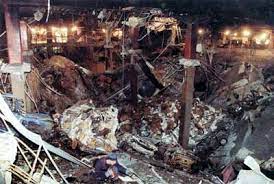
The explosion ripped through the foundation of the North Tower, tearing a massive crater through several levels of the parking garage. The force of the blast reverberated throughout Lower Manhattan, shattering windows, collapsing ceilings, and sending shockwaves of terror across the city. Six people tragically lost their lives in the attack, and over a thousand others suffered injuries, many of them severe.

Despite the immense destruction caused by the explosion, the terrorists' ultimate goal of toppling the Twin Towers was not realized. However, the attack served as a chilling wake-up call for the United States, exposing vulnerabilities in its homeland security infrastructure and highlighting the growing threat posed by international terrorism.

In the aftermath of the bombing, law enforcement agencies launched a massive investigation to apprehend those responsible for the heinous act. The meticulous detective work eventually led to the capture and prosecution of several individuals involved in planning and executing the attack. Ramzi Yousef, the mastermind behind the bombing, was eventually apprehended in Pakistan in 1995 and later convicted in U.S. federal court.

The 1993 World Trade Center bombing also prompted a reassessment of national security policies and procedures, leading to significant enhancements in counterterrorism efforts and intelligence gathering capabilities. It served as a stark reminder that the United States was not immune to the threats posed by extremist ideologies and rogue actors operating on the global stage.

Moreover, the attack underscored the importance of international cooperation in combating terrorism, as it became increasingly evident that extremist networks transcended national borders and operated across multiple jurisdictions. The tragic events of February 26, 1993, would reverberate for years to come, shaping the trajectory of U.S. foreign and domestic policy and forever altering the nation's perception of its own security.