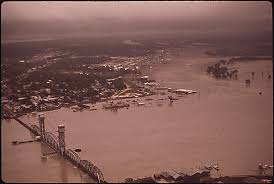
In 1973, the United States experienced devastating floods in the state of Mississippi that wreaked havoc on communities, infrastructure, and the economy, causing widespread destruction and displacement. The Mississippi Floods of 1973 were among the most severe natural disasters to strike the region, prompting a massive response effort and highlighting the need for improved flood control measures, emergency preparedness, and disaster response capabilities.

The floods in Mississippi in 1973 were precipitated by a combination of factors, including heavy rainfall, snowmelt, saturated soil conditions, and overflowing rivers and tributaries. The swollen waters of the Mississippi River and its tributaries inundated low-lying areas, breached levees, and submerged homes, businesses, farmland, and critical infrastructure, leading to extensive damage and loss of life.

The impact of the floods was particularly severe in rural communities and agricultural areas along the Mississippi River, where crops were destroyed, livestock perished, and homes were swept away by the rushing waters. The floods also disrupted transportation networks, communication systems, and utilities, further complicating relief and recovery efforts in the affected areas.

The response to the Mississippi Floods of 1973 involved a coordinated effort by federal, state, and local authorities, as well as volunteer organizations, relief agencies, and the private sector. Emergency response teams were deployed to rescue stranded residents, provide medical care, distribute food and supplies, and assess the extent of the damage caused by the floods.

The Mississippi Floods of 1973 also underscored the importance of flood control infrastructure and water management practices in mitigating the impact of natural disasters and protecting communities from future flooding events. The devastation wrought by the floods prompted calls for increased investment in levees, dams, reservoirs, and other flood control measures to reduce the risk of catastrophic flooding and safeguard lives and property.

The aftermath of the Mississippi Floods of 1973 brought to light the resilience and solidarity of the affected communities, as neighbors, volunteers, and relief workers came together to provide assistance, support, and comfort to those in need. The spirit of cooperation and mutual aid that emerged in the wake of the floods helped to strengthen community bonds, foster a sense of unity, and inspire hope for the future.

In the years following the Mississippi Floods of 1973, efforts were made to enhance flood preparedness, improve early warning systems, and bolster disaster response capabilities to better protect vulnerable communities from the threat of flooding. The lessons learned from the 1973 floods informed future planning and policy decisions related to flood risk management, land use planning, and infrastructure development in flood-prone areas.

The Mississippi Floods of 1973 served as a sobering reminder of the destructive power of nature and the importance of resilience, adaptation, and cooperation in the face of natural disasters. The floods tested the resolve and resourcefulness of the people of Mississippi, challenging them to rebuild, recover, and forge a path forward in the aftermath of tragedy.